
The 5-Minute Rule: Why Speed-to-Lead is Your Biggest Revenue Leak
By Milad Nikaeen | 8 min read | Updated August 20, 2026
You just spent money on ads. A lead comes in at 7:00 PM. You are at dinner, so you think, I’ll call them tomorrow.
By morning the job is gone. They hired the shop that texted back while you were eating. That is the follow-up leak in Why your marketing isn’t working. If nobody found you, start with the Maps listing. If they visited and bounced, that is the trust gap or a pretty video. Buying ChatGPT does not close this gap — a writer is not an agent. This article is for the owner who already gets inquiries and still loses them.
Two studies. Do not mix the numbers.
The “5-minute rule” and the “7× in the first hour” line are both James Oldroyd’s work. They are not the same paper. Most blogs mash them together and then pin the mash-up on Harvard Business Review. HBR did not publish the 100× five-minute finding.
The five-minute window comes from the 2007 InsideSales.com / MIT Lead Response Management study, presented by Oldroyd with MarketingSherpa. Researchers looked at three years of data across six companies — more than 15,000 web leads and 100,000 call attempts — to see when a callback actually reached someone and when it qualified. The study did not measure close rates. The finding that made the slide famous: the odds of contacting a lead if called in 5 minutes versus 30 minutes dropped 100 times. The odds of qualifying dropped 21 times. From 5 minutes to 10 minutes, contact odds already dropped five times. The original write-up is still on MarketingSherpa’s file server: Lead Response Management Report (16 October 2007).
Four years later, Oldroyd, Kristina McElheran, and David Elkington published “The Short Life of Online Sales Leads” in the March 2011 Harvard Business Review (also listed on the Harvard Business School faculty page). That article is an audit of 2,241 US companies. Among firms that replied within 30 days, average response time was 42 hours. 23% never replied at all. 37% got back within an hour. A separate dataset in the same article — 1.25 million leads across 42 companies — found that firms who tried to contact a lead within an hour were nearly 7 times as likely to qualify it as those who waited one more hour, and more than 60 times as likely as those who waited a day.
Put plainly: five minutes is the contact window from 2007. The first hour is the qualification window HBR printed in 2011. Waiting until tomorrow fails both tests.
The admin trap is still the default in 2026
You cannot sit on the phone while you are on a job. That is the admin trap — revenue capped by how fast you personally type. LocaliQ’s 2026 SMB trends report still finds only 32% of small businesses using lead-management software. HubSpot’s current speed-to-lead guidance is blunt: getting under 30 minutes is the practical bar most teams miss because notifications, assignment, and follow-up live in different tools — see Lead Response Time: Why Speed Matters.
Salesforce’s SMB takeaways from State of Marketing 2026 add the buyer side: 52% of SMB marketers say their current tools cannot handle two-way conversations at scale, while 78% now trust AI to respond to inquiries. Buyers will talk. Most stacks still wait for the owner to finish dinner.
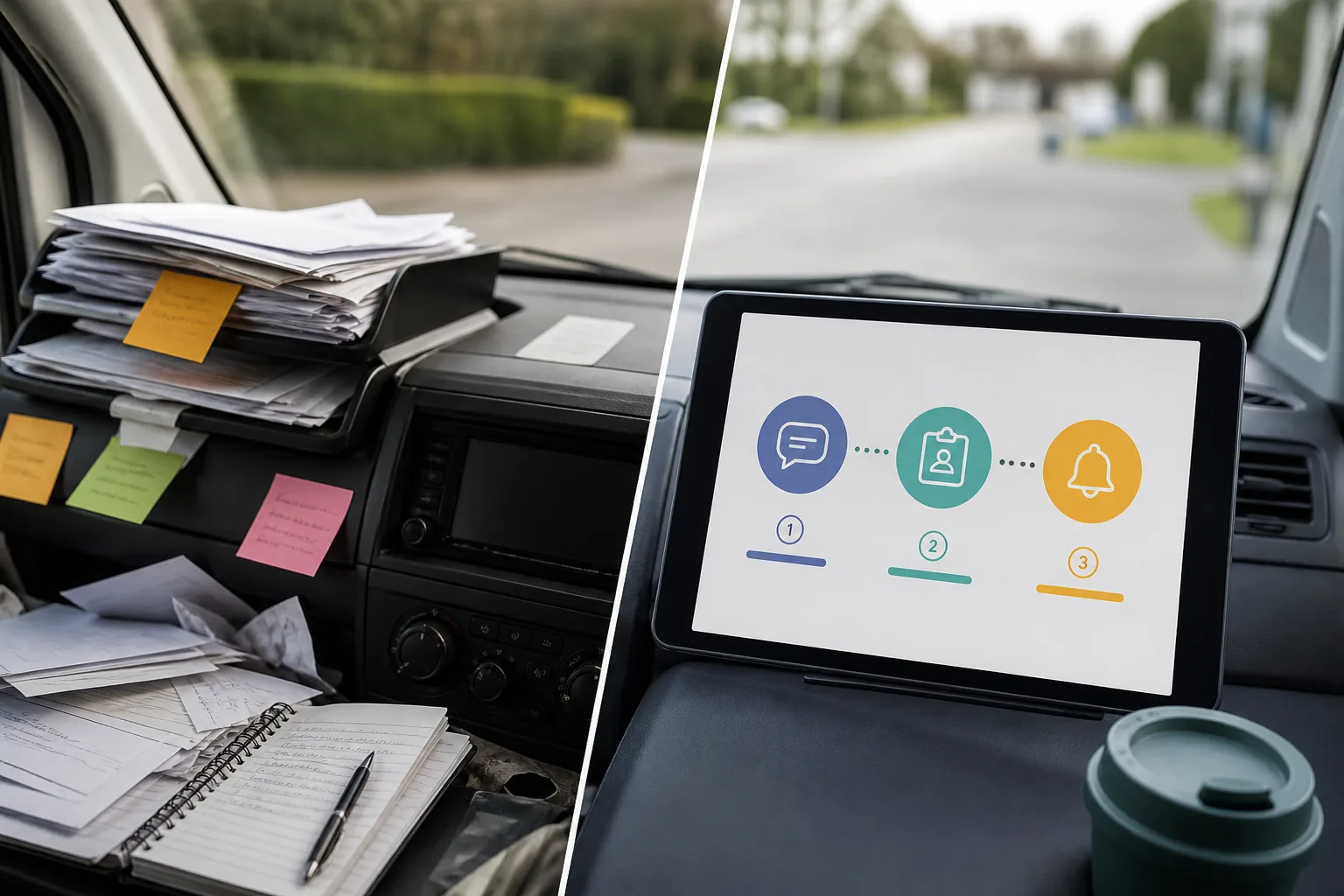
Why the lead goes cold before breakfast
When someone submits a form they are not “in your funnel.” They have a problem now. If nothing happens, two things do:
- A validation gap. They wonder if the form broke. Doubt is cheaper than waiting.
- A shopping loop. The next three shops are one Maps tap away. The first human-feeling reply usually wins the appointment, not the best brochure.
That is why a pretty site and a slow inbox still lose to a mediocre site that texts back. Trust got them to inquire. Speed keeps them.
The clock starts when the conversion fires
You cannot run a five-minute SLA if you do not know a lead arrived. Google’s own help is blunt: clicks are not the goal. Conversion measurement exists so a form, a call, or a booked job is a timestamp — the moment the Oldroyd clock starts. If that event never hits your CRM, tomorrow’s “I’ll follow up” is a guess.
Google’s official walkthrough:
Google Ads Help — create a conversion action so you know when the lead clock started (watch on YouTube)
HubSpot’s knowledge base on syncing CRM lifecycle events back to Google Ads is the next layer: optimize for a conversation, not a form fill from the wrong town. An AI caption writer does not create that timestamp. An agent in the CRM does — ChatGPT is not an AI agent.
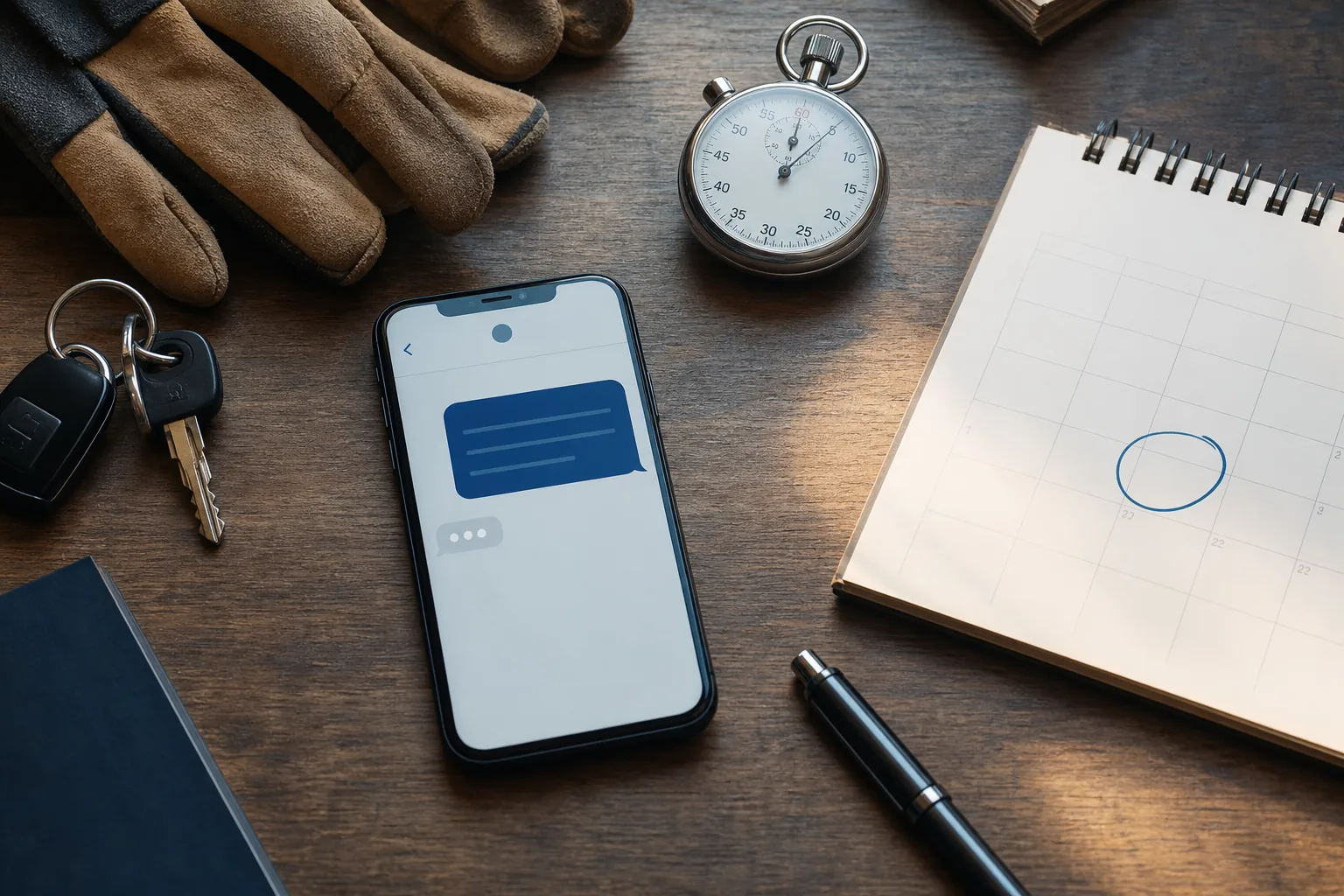
What the first five minutes should do
You do not need to quote the job from the dinner table. You need a system that:
- Acknowledges the person immediately — SMS or email with a name, a next step, and a human handoff. Not a “thanks for your inquiry, we will be in touch.”
- Logs the lead so it does not live in a Gmail thread. LocaliQ’s 32% figure is the reason most owners cannot tell you last month’s response time.
- Alerts you only when they reply — so you do the real work, not inbox triage.
A first text can be as plain as: thanks, we got this, here is when we can talk, tap to pick a slot. The words matter less than the minute they arrive. The words do matter if they promise a town you do not serve or a price you cannot stand behind. That is Brand Strategy, not a prompt pack. If the auto-reply has nothing true to send, that is Creative Production — the crew, the job, the neighbourhood, not a stock van. See stock photos aren’t proof. WealSmart CRM is the agent that fires the reply and keeps the record. If you want the sequence without guessing, take the five-step growth plan.
A 15-minute speed-to-lead test
- Submit your own form after hours. Time the first reply. If it is you, tomorrow, you failed the 2007 test and the 2011 test.
- Ask whether a CRM record exists without you typing it. Inbox screenshots are not a system.
- Check that the conversion is timestamped in Google Ads or the CRM. No timestamp, no SLA.
- Write the guardrails the first reply is allowed to say: service area, what you never quote in chat, when a human takes over.
- Then take the growth plan so the next dollar goes to WealSmart, strategy, or creative — not another notification app on top of Gmail.
If you want that sequence without guessing, use the five-step growth plan on the homepage. A few minutes. It maps your answers to Brand Strategy, Creative Production, or WealSmart CRM.
FAQ
Is the 5-minute rule from Harvard Business Review?
No. The 5-minute / 100× contact finding is Oldroyd’s 2007 MIT / InsideSales Lead Response Management study. HBR’s 2011 article is the 42-hour average, 23% never replied, and the 7× / 60× hour-window qualification stats.
Do I have to call within five minutes, or is a text enough?
The 2007 work measured calls. For a service shop, the job is a real first touch the buyer feels — usually SMS plus a logged record — then a human when they answer. A voicemail at 9 AM is not the same clock.
What should I do first with WealWave?
Fill out the 5-step growth plan. If the leak is follow-up, we start with WealSmart. If the auto-reply would have nothing true to say, we start with Brand Strategy and Creative.